Baga: The Grape, Its Friends, and Its Wondrous Wines
It was the year 1756 when Sebastião José de Carvalho e Melo decided to establish the General Company of Agriculture of the Vineyards of the Upper Douro. Through this, the future and all-powerful Marquis of Pombal hoped to safeguard the trade and quality of the famed Port Wine. However, to protect this favoured son, the 'Enlightened Despot' decided to sacrifice almost all the other children of the national oenological landscape.
In order to eliminate competition for Douro wine, the Marquis ordered a blind, drastic, and violent measure: the merciless uprooting of the vineyards in what is now Bairrada, a region whose viticultural pedigree predates the very foundation of the nation.
The destruction of countless vines led to the destruction of the livelihood of innumerable families in Bairrada. The Crown's agents were tasked with silencing Bairrada and its wines. Yet, the Marquis underestimated not only the stubbornness of the Beira people but also the vitality of certain vines that insisted on springing back from their deep roots: the vines of the Baga caste, the most indomitable survivor of this historical persecution.

The "Debt Payer" and the Tyranny of Quantity
The variety was elevated to the status of Bairrada's matriarch not because it was easy to manage, but because it was absolutely necessary for those toiling on the threshold of poverty. Indeed, thanks to its teeming vigour and high productivity, Baga ensured the volume of wine needed to settle the bills of the agricultural year. Hence, farmers also called it the ‘Paga Dívida’ (Debt Payer).
However, by the 20th century, such generous productivity would turn into the proverbial double-edged sword. Given the emphasis on quantity, many producers harvested too early to avoid the first rains of the year. Born of these unripe grapes, Baga wines were perceived as too rude, harsh, and astringent.
Evolving tastes eventually rejected this roughness. In response, some attempted to soften their blends by introducing international varieties such as Merlot or Cabernet. Identity was thus being diluted in the name of survival.
The Arrival of the Baga Friends
But the fault never lay with Baga, nor with those who cultivated it in low-lying, fertile, and humid zones. The fault stemmed from a misunderstanding of the grape and the warped incentives imposed by a market based on cooperative wineries—after all, when grapes are paid for by the kilo, it mattered little whether the Baga was of quality or not. Tired of this state of affairs, a handful of producers decided to demonstrate that Baga’s attributes were not limited to resistance and productivity.
In the 1980s, families such as the Patos initiated this movement by proving that the supposedly woolly texture of Baga could be transmuted into the texture of the finest silk. And they were not alone in this crusade. Other 'Baga Friends', such as Mário Sérgio, were fundamental to this rescue. With quiet wisdom and unshakable conviction, these visionaries proved that Baga did not need to be tamed by force. It simply needed to be worked well.
The great revolution in quality did not happen solely in the cellars, but also in the vineyards. Just as in the neighbouring Dão, the paradigm shift led to the sacrifice of volume in favour of excellence. This demanded measures such as green harvesting (monda de cachos), which was felt by the old guard as a sacrilege: how to justify abandoning grapes on the ground before the harvest? Nevertheless, this and other measures allowed for the achievement of regular and homogenous maturation, which greatly benefited the wines born of this variety.
Baga: From the Clay of Bairrada to the Granite of Dão
One must understand the soil to understand Baga. This is because, in Bairrada, the original sin lay in planting on low plains or sandier soils. in these locations, roots absorb water too quickly with the first rains of September. Since Baga possesses a sensitive skin within a compact bunch, the excess water swells the berry to the point of splitting and rotting. Furthermore, more fertile soils make the vine too leafy, maturation more difficult, and the wines more acidic.
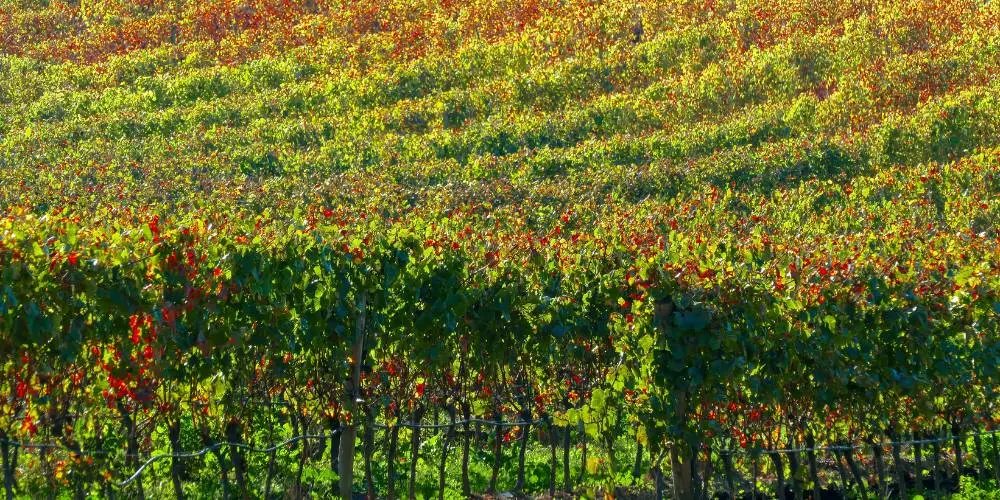
However, the situation changes radically on the slopes of the region's typical clay-limestone soils (the barros that give rise to the name ‘Bairrada’). There, the variety finds balance, creating fresh, structured, portentous wines with long ageing potential. These clay soils offer excellent drainage with just the right amount of humidity, leading to a slower ripening of the grapes and greater aromatic complexity.
In the acidic, granitic soils of the Dão, meanwhile, Baga acquires a quality that is more mineral, more linear, and more focused. Here, the wines are also shaped by altitude and the resulting combination of cool nights and warm days. At Quinta da Alameda, these ingredients of terroir lead to a paced maturation that generates fine tannins and marked acidity, without loss of structure. It falls to us merely to revere this grape, so charismatic and representative of the finest Portuguese reds.
The eminence of Baga is not, however, limited to reds. In truth, the variety also forms an extraordinary base for world-class sparkling wines. Vibrant and tense, the grape's natural acidity serves as the backbone for these sparkling wines, designated by the French as ‘Blanc de Noirs’ (White from Blacks).
Baga at the Portuguese Table
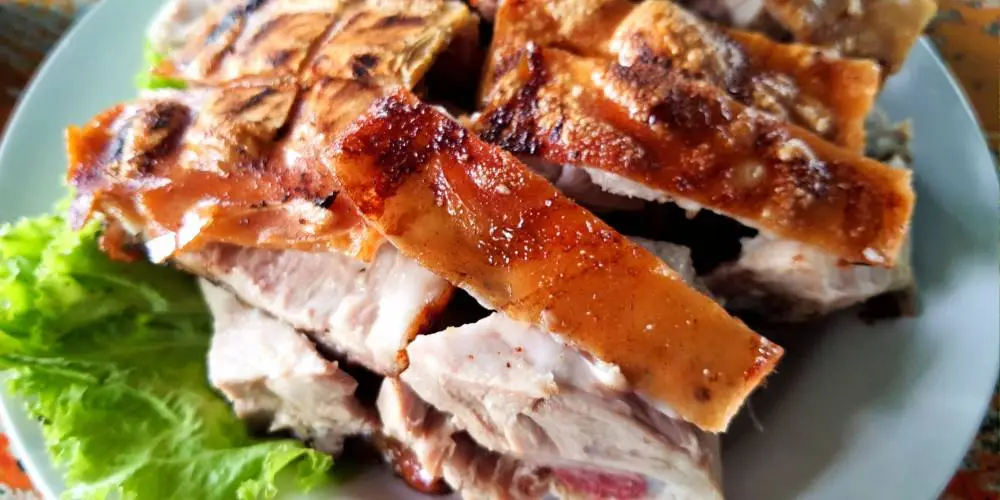
Mother of superb reds and a source of sparkling freshness, the variety’s versatility extends to its varied gastronomic liaisons. Baga is a convivial grape, as at ease cutting through the fat of Leitão à Bairrada (Suckling Pig—a heritage pairing) with its razor-sharp acidity, as it is supporting intense cheeses with its structure. Its wines also pair exemplarily with game, cured sausages (enchidos), goat stews (chanfanas), oven-roasted dishes, and mushrooms. Due to their freshness and light tannin, Baga rosés accompany salads, light grills, and Asian cuisine well. Finally, besides being excellent with traditional rissoles and codfish cakes, the sparkling wines sublime the gustatory pleasure of rich seafood or exotic foods with subtle spice.
In a Small Berry, Many Great Lessons
Having passed away in 1782, the Marquis of Pombal did not comprehend the potential of Baga or Bairrada. And he was not the only one, nor the last, of course. It is true that his intervention aimed to save Port Wine and make better use of the now-infamous Methuen Treaty. But, as history has shown, fidelity to this treaty with the English did much to delay Portugal’s development at the cost of betting on a single prodigal son: in exchange for reduced tariffs on Port Wine (fundamentally), Portugal opened its doors to the textiles that fuelled the Industrial Revolution in the United Kingdom. Consequently, Portugal lost the incentive to nurture its internal manufacturing for the benefit of the wealth of others. The lessons of all this?
Perhaps they are as follows: one cannot cultivate excellence by decree; one cannot compromise identity and authenticity; and one cannot be blinded by initial impressions. By surviving despotic measures and distorted markets, the renegade Baga proved that wealth was never in the grapes of Bordeaux or the textiles of Manchester. It was all thanks to its stubbornness, and the help of ever-faithful friends.
Baga Variety: Summary
Principal Name and Synonyms
Baga; Paga Dívida (mainly in Dão); Tinta da Bairrada / Tinta da Baga (used in the Douro and older references); Poeirinho / Poeirinha (Coimbra, Cantanhede, Ribatejo); Carrasquenho (Bairrada, Tomar); Baga de Louro (Dão and Bairrada). Baga exhibits a relatively broad set of synonyms used in different Portuguese regions. Some are historical, while others still appear on labels or in technical literature.
Genetic and Geographic Origin
The origin of Baga appears to be fundamentally from Bairrada, with a solid historical anchorage in the coastal strip between the Vouga and Mondego rivers. Genetically, it is an ancient and well-differentiated Portuguese variety, though its parentage is not yet clearly established in existing DNA studies. One of its progenitors appears to be Malvasia Fina B. Some propose a geographical provenance in the neighbouring Dão given the greater intra-varietal genetic variability of the caste in this region; however, this is a much-debated hypothesis. Indeed, 19th-century ampelographers (Aguiar, Vila Maior) already classified Baga as a Bairrada variety, restricting its origin locally. Today, it is consensual to describe this variety as indigenous to the region where it occupies a large part of the viticultural surface and constitutes the predominant red grape. Later diffusion occurred mainly to neighbouring regions (such as Dão or Douro), but it also appears in Alentejo and Trás-os-Montes (often in old vineyards under local synonyms). In Bairrada, Baga's excellent performance is intimately linked to clay soils under an Atlantic climate, reinforcing the idea of long local adaptation. The presence of pre-phylloxera Baga vines in some ancient plots, as well as references to “older genetic material” predating modern clonal selection, supports the notion of a traditional genetic background rooted in the region.
Viticulture and Ampelography
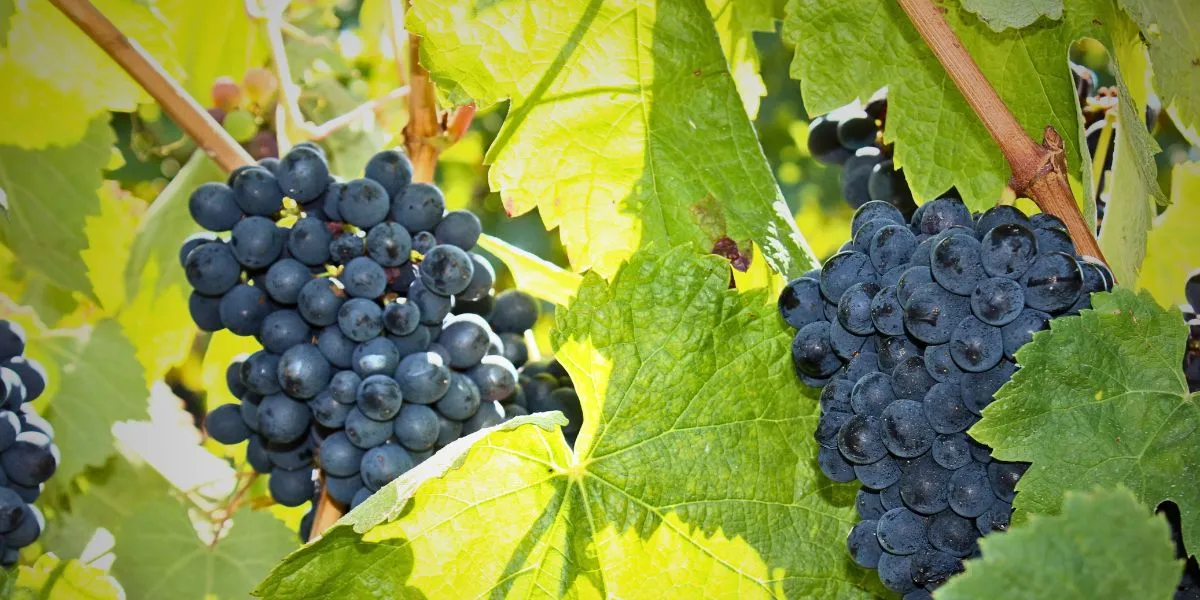
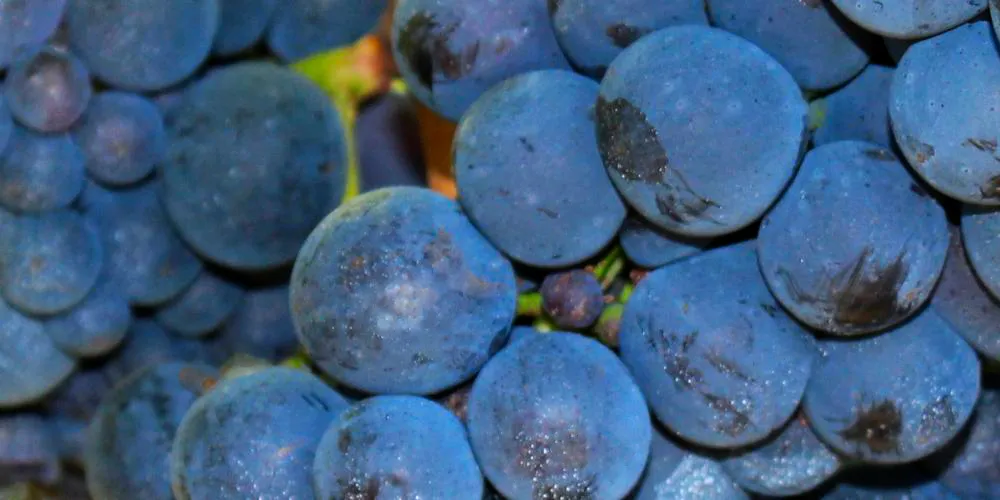
Baga is a demanding grape in the vineyard and well-characterised ampelographically. Its reputation as “capricious” stems largely from the challenging viticulture in the cool, humid Atlantic climate of Bairrada. It presents generally medium to strong vigour, with a tendency for high yields if crop load is not controlled. This requires severe pruning, managing fruit set (desavinho), and often partial leaf plucking (desfolha) to ensure adequate phenolic maturity. Late-ripening, it demands well-drained soils and warm exposures; in wetter vintage years, it is highly sensitive to grey rot (Botrytis), making canopy aeration and careful yield management fundamental. Although adaptable to various soil types, it shows better qualitative behaviour in clay-limestone soils (barros) of medium to low fertility. Regarding ampelography, its bunch is generally medium to large, compact, cylindrical to conical, with some wings; the berry is small, spherical, with intensely coloured skin and non-coloured pulp; such attributes explain its aptitude for structured reds, but also for rosé sparkling wines and even “blanc de noirs”. It presents a young shoot with a greenish to light bronze tone and young leaf of a light green hue; the adult leaf is medium to large, typically orbicular, frequently three-lobed or five-lobed, with an open petiolar sinus, regular short teeth, and slight hairiness on the lower surface.
Sensitivity to Diseases
Baga is primarily susceptible during the maturation phase (due to rots, rather than being fragile against other pathogens). Such sensitivity arises from the compact bunch and late ripening, demanding canopy aeration and rigorous production control. It exhibits low sensitivity to powdery mildew (oídio) and downy mildew (míldio), a fact that may have contributed to its great adaptability to the Bairrada climate. The choice of plots on slopes, well-exposed and well-drained, is basal to the vine’s health.
Body and Structure of Baga Wines
Baga reds tend to materialise a medium to full body, but with a sensation of firmness rather than alcoholic volume. The combination of marked tannins and high acidity conveys a very taut structure, ideal for ageing. They normally present moderate alcohol content (circa 12.5–13.5%), with a concentration of colour and phenolic compounds that reinforce the perception of body without seeming heavy. They almost always maintain a line of freshness that distances them from an overripe profile. Firm tannins—sometimes rustic in youth—as well as high acidity are typical aspects of the variety. Such attributes generate structured and often austere wines when young, but with great capacity for evolution in the bottle.
Tannins and Texture
As a rule, Baga tannins are strong, firm, and structured, especially in the classic styles of Bairrada. They may seem rustic or hard in youth; however, with good vineyard maturation and some ageing, the texture and tannins acquire finesse and silkiness. When well-crafted, the variety gives rise to wines with a structured and elongated profile on the palate.
Acidity
The acidity of Baga wines is typically high and very striking. This acidity transmits freshness, tension, and great ageing capacity to both reds and sparkling wines.
Flavours and Aromas
The typical flavours and aromas of Baga wines are centred on spicy and vegetal nuances escorted by notes of tobacco and balsamic hints of cedar. The fruit exudes a wild character. Indeed, forest fruits (blackberries, raspberries, blueberries) and black plum are frequent descriptions, often in a fresh register in styles with more restrained extraction. In some wines, sour cherry and nuances of red fruit compote also appear (when maturation is more advanced). Regarding non-fruity notes, hints of coffee, smoke, tobacco, and dried herb are very typical, especially in more structured wines and classic Bairrada styles (i.e., fermented in lagares with stems and aged in large wooden vats/tonéis). With bottle ageing, touches of leather, dried leaves, moss, truffle, and other earthy (sous-bois) nuances may emerge, adding complexity to the variety's profile. An evolved Baga is savoury, complex, elegant, and sophisticated.
Colour
The typical colour of Baga reds ranges from a relatively open ruby to deep ruby or garnet, depending on maturation and winemaking style. In dry years with good ripening, it originates wines quite deep in colour; in lighter styles or cooler harvests, the colour may be paler.
Ageing Potential
In general, Baga wines exhibit very high ageing potential. In good vintages and classic Bairrada styles, it is common for them to evolve positively for decades.

Article reviewed by Patrícia Santos, head winemaker at Quinta da Alameda. She holds a degree in Oenology from UTAD (University of Trás-os-Montes and Alto Douro, 2001), and trained under the guidance of Anselmo Mendes. Her experience spans the wine regions of Dão, Bairrada, and Beira Interior, as well as Arribes.

